
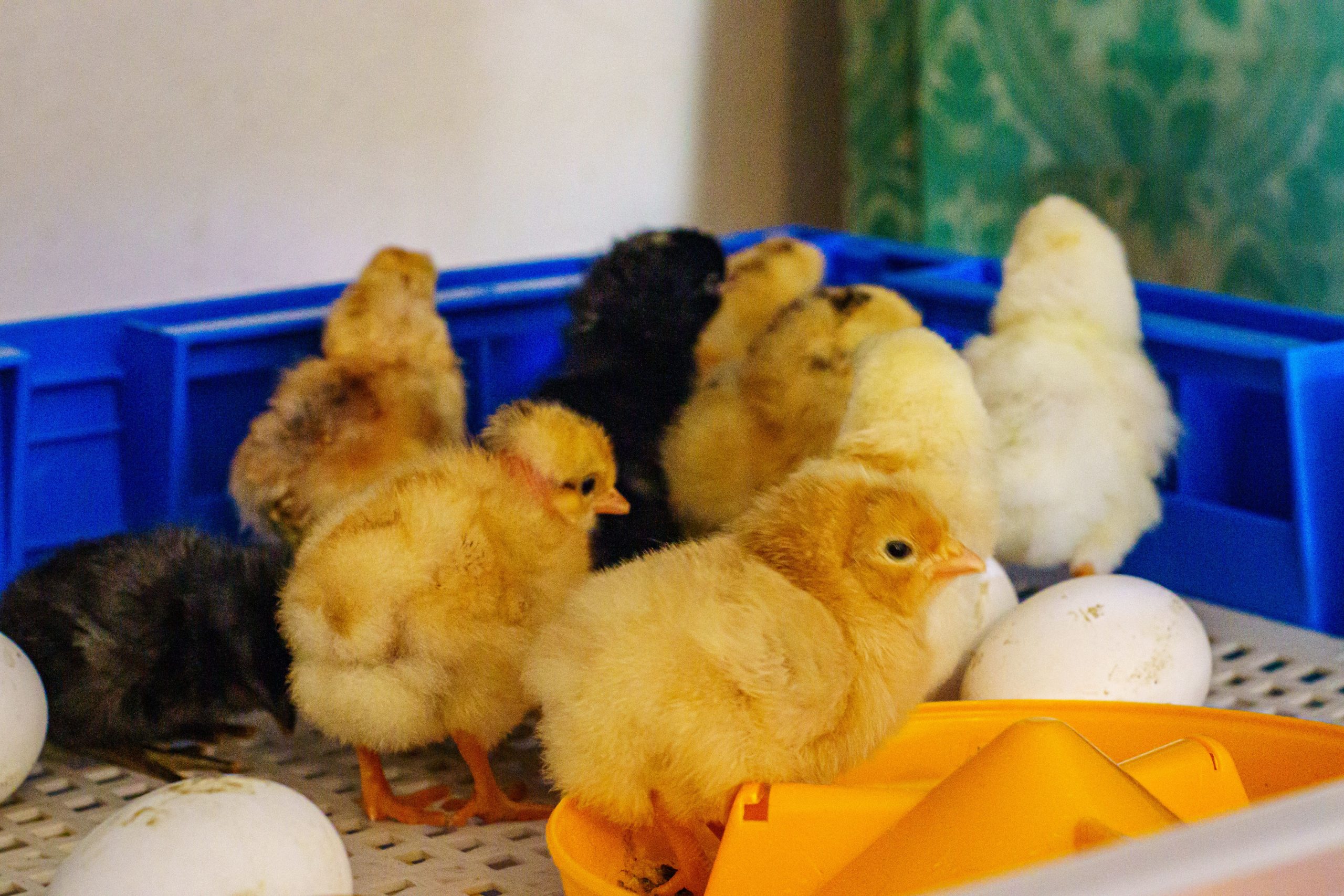

Incubating chicken eggs at home is a rewarding project, whether you are hatching your first batch of backyard layers or expanding a small flock. Success comes down to controlling three factors closely: temperature, humidity, and turning.
Choosing Fertile Eggs
Fertile eggs must come from a flock that includes a rooster, and hatching success improves significantly when eggs are fresh, ideally less than seven days old, and stored properly before incubation, pointed end down at around 55°F with moderate humidity.
Setting Up Your Incubator
Whether you use a still-air or forced-air (fan-assisted) incubator, run it empty for 24 to 48 hours before adding eggs to confirm it holds a stable temperature and humidity level. Forced-air incubators should be set to 99.5°F, while still-air incubators typically run slightly warmer, around 101-102°F measured at the top of the egg.
Humidity Requirements
For most of the 21-day incubation period, maintain humidity around 45 to 50 percent. During the final three days, known as “lockdown,” increase humidity to 65 to 70 percent to help soften the shell membrane and support successful hatching.
Turning Eggs
Eggs need to be turned at least three to five times a day for the first 18 days to prevent the developing embryo from sticking to the shell membrane. Many incubators include automatic turners, which simplify this process considerably compared to manual turning.
Candling to Check Development
Candling, shining a bright light through the egg in a dark room, lets you check for developing veins and embryo growth around day 7 to 10, and again later to confirm continued development. Clear eggs with no visible development are likely infertile or have stopped developing and can be removed.
The Hatching Process
Around day 21, chicks begin “pipping,” making a small hole in the shell, followed by a process that can take 12 to 24 hours to fully emerge. Resist the urge to help a struggling chick out of the shell too early, since premature intervention can cause bleeding or injury if the chick is not actually ready.
Common Incubation Problems
- Low hatch rates – Often traced back to inconsistent temperature or humidity, or eggs that were too old or improperly stored before setting.
- Chicks stuck in the shell – Frequently caused by humidity that was too low during lockdown, causing the membrane to dry out and stick to the chick.
- Early embryo death – Can result from temperature spikes, rough handling, or turning being stopped too early.
After the Hatch
Leave newly hatched chicks in the incubator until they are dry and fluffy, then move them to a prewarmed brooder at around 95°F, decreasing gradually each week as they grow and feather out.
Ready to start your own flock from healthy hatching stock? Browse our current hens for sale.


