
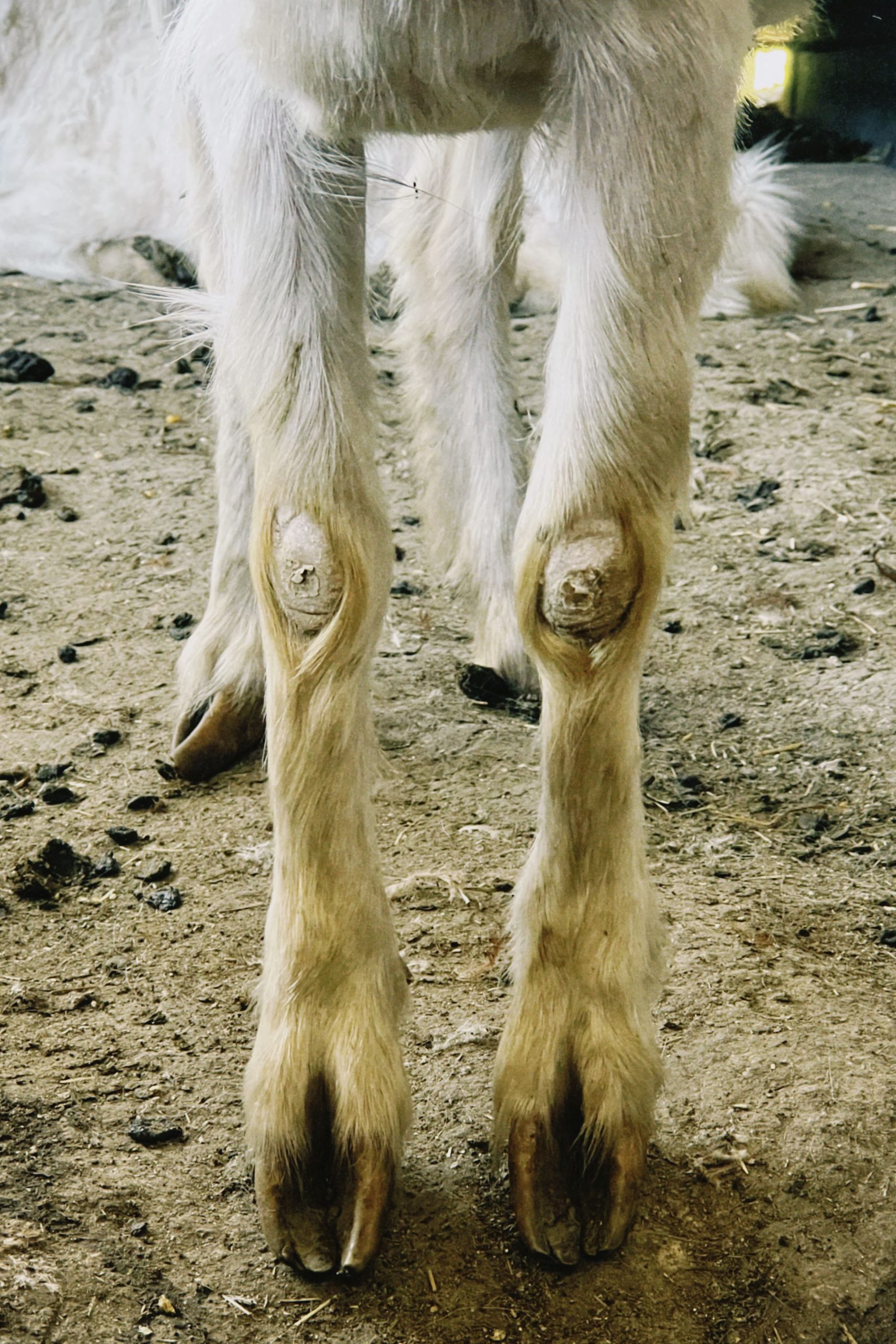

Hoof care is one of the most commonly neglected aspects of goat husbandry, yet overgrown or improperly trimmed hooves can lead to lameness, joint problems, and secondary infections like foot rot. The good news is that hoof trimming is a straightforward skill any goat owner can learn.
How Often Should You Trim Goat Hooves?
Most goats need trimming every 6 to 8 weeks, though the exact interval depends on terrain, genetics, and individual growth rate. Goats kept on rocky or abrasive terrain may wear their hooves down naturally and need less frequent trimming, while goats on soft pasture or in wetter climates often need more regular attention.
Signs Hooves Need Trimming
- Overgrown, curling, or flaring hoof walls that no longer sit flat on the ground.
- Visible limping or reluctance to walk normally.
- A change in gait, standing or walking on the outside edges of the hooves.
- Cracking, splitting, or an uneven wear pattern between hooves.
Tools You’ll Need
A pair of quality hoof trimmers or shears designed specifically for goats and sheep, a hoof pick or rasp for cleanup, and a stable place to restrain the goat, such as a stanchion or a helper holding the animal, are the basic requirements. Keeping trimmers sharp makes the job faster and reduces the risk of crushing rather than cutting the hoof tissue.
Step-by-Step Trimming Process
- Secure the goat calmly, ideally on a stand or stanchion at a comfortable working height.
- Clean debris and mud from the hoof with a hoof pick.
- Trim the overgrown hoof wall in small increments, following the natural angle of the hoof.
- Trim both toes evenly, checking that the hoof sits flat and level when set down.
- Stop trimming before you reach the pink, sensitive tissue (the quick) to avoid bleeding and pain.
- Repeat on all four hooves, comparing pairs for evenness.
What If You Cut Too Deep?
Minor bleeding from trimming too close to the quick usually stops on its own or with light pressure and a bit of blood-stop powder. Keep the area clean afterward to prevent infection, and the goat should heal without lasting issues, though it’s worth trimming more conservatively next time.
Preventing Foot Problems Between Trims
Keeping bedding and pens dry, providing rocky or abrasive surfaces near feeding areas to promote natural wear, and watching for early signs of foot rot or scald all help reduce hoof problems between trimming sessions. Wet, muddy conditions are a major contributor to foot infections, so drainage and dry resting areas matter as much as the trimming schedule itself.
Building Good Hoof Care Habits
Regular hoof trimming, done every 6 to 8 weeks as part of your normal herd management routine, prevents the vast majority of lameness issues before they start. It’s a simple habit that pays off in healthier, more comfortable, and more productive goats.
Looking to add healthy, well-cared-for goats to your herd? Browse our current goats for sale.