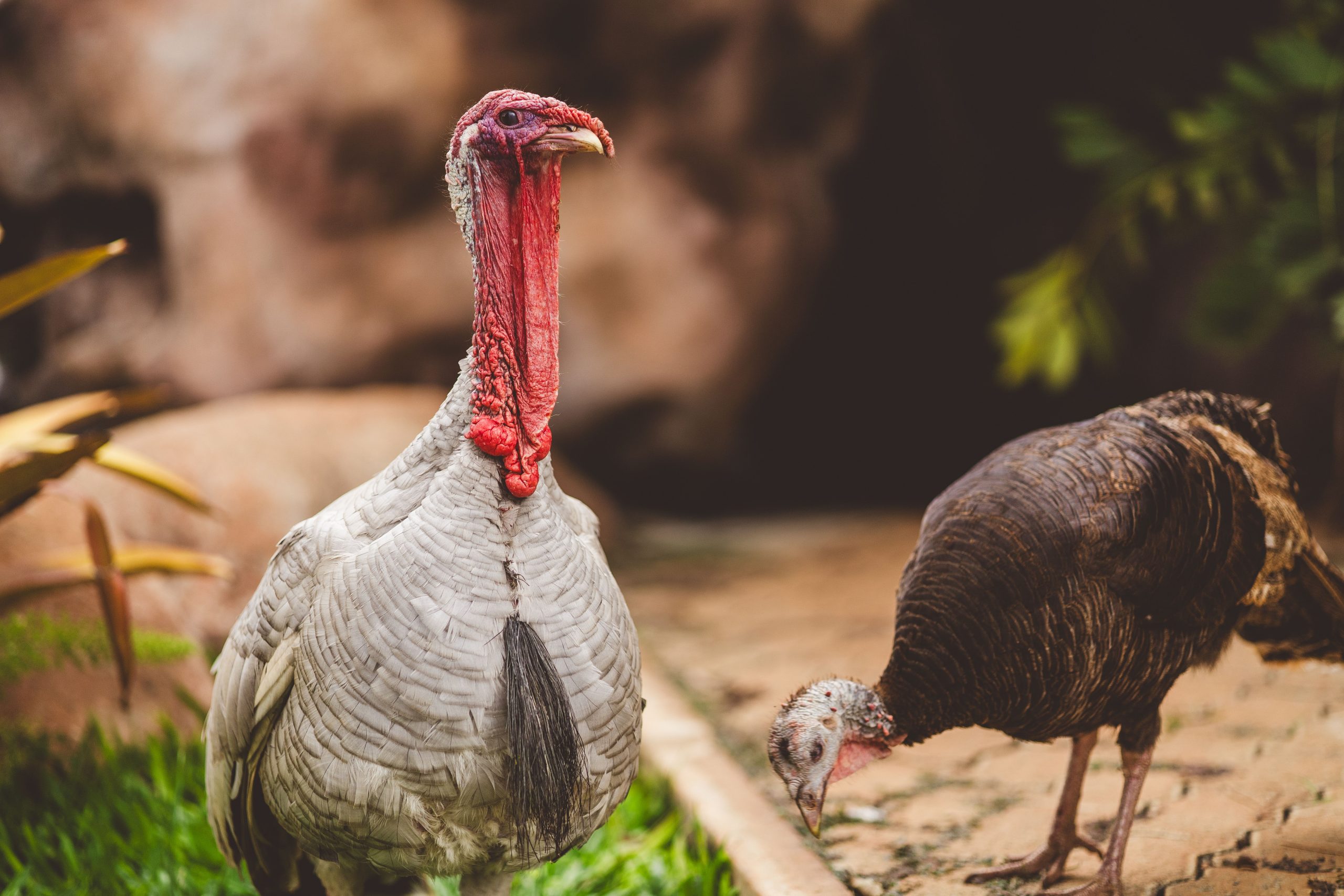

Raising turkeys is more rewarding, and slightly more involved, than raising chickens. Whether you’re raising them for a holiday meat supply or as an addition to a diversified small farm, here’s what beginners need to know.
Choosing a Turkey Breed
Broad Breasted White and Broad Breasted Bronze are the standard commercial meat breeds, known for rapid growth and large carcass size, but they require careful management and generally can’t reproduce naturally due to their heavy build. Heritage breeds like the Bourbon Red, Narragansett, and Royal Palm grow more slowly, can breed naturally, and tend to be hardier foragers, making them popular with small-scale and pasture-based producers.
Brooding Poults
Turkey poults (baby turkeys) need a warmer brooder temperature than chicks, generally starting around 95-100°F in the first week and decreasing gradually by about 5 degrees per week. Poults are more delicate than chicks in their first few weeks and benefit from a clean, draft-free brooder with easy access to feed and water at all times.
Feeding Requirements
Turkeys need a higher protein feed than chickens, especially in the first eight weeks, when a game bird or turkey starter feed with around 28 percent protein supports their rapid early growth. As they mature, the protein percentage in their ration is gradually reduced, transitioning to a grower and then finisher feed appropriate for their age and purpose.
Housing and Space Needs
Turkeys need considerably more space than chickens, both in the coop and on pasture. A general guideline is at least 6 square feet per bird indoors and significantly more outdoor range space, since turkeys are active foragers that do best with room to roam. Roosts should be sturdy and low to the ground, since heavier breeds are prone to leg injuries from high jumps.
Common Health Considerations
Turkeys are notably more sensitive to a protozoal disease called blackhead disease, which is often transmitted through contact with chickens or soil contaminated by chicken droppings. Many experienced turkey keepers recommend housing turkeys separately from chickens, particularly early in life, to reduce this risk.
Turkeys and Predator Awareness
Turkeys are curious and sometimes less cautious than chickens, making secure housing and daytime supervision on range important, especially in areas with hawks, foxes, or coyotes. A livestock guardian dog or secure electric poultry netting can significantly reduce predator losses for free-ranging flocks.
Timeline to Market Weight
Broad Breasted varieties typically reach processing weight in 14 to 18 weeks, while heritage breeds often take 24 to 28 weeks or longer to mature fully, reflecting their slower, more natural growth pattern.
Getting Started
Turkeys make a rewarding addition to a diversified small farm, offering both meat production and, with heritage breeds, the potential for a self-sustaining breeding flock. Browse our current poultry for sale to find quality stock to start your flock.