
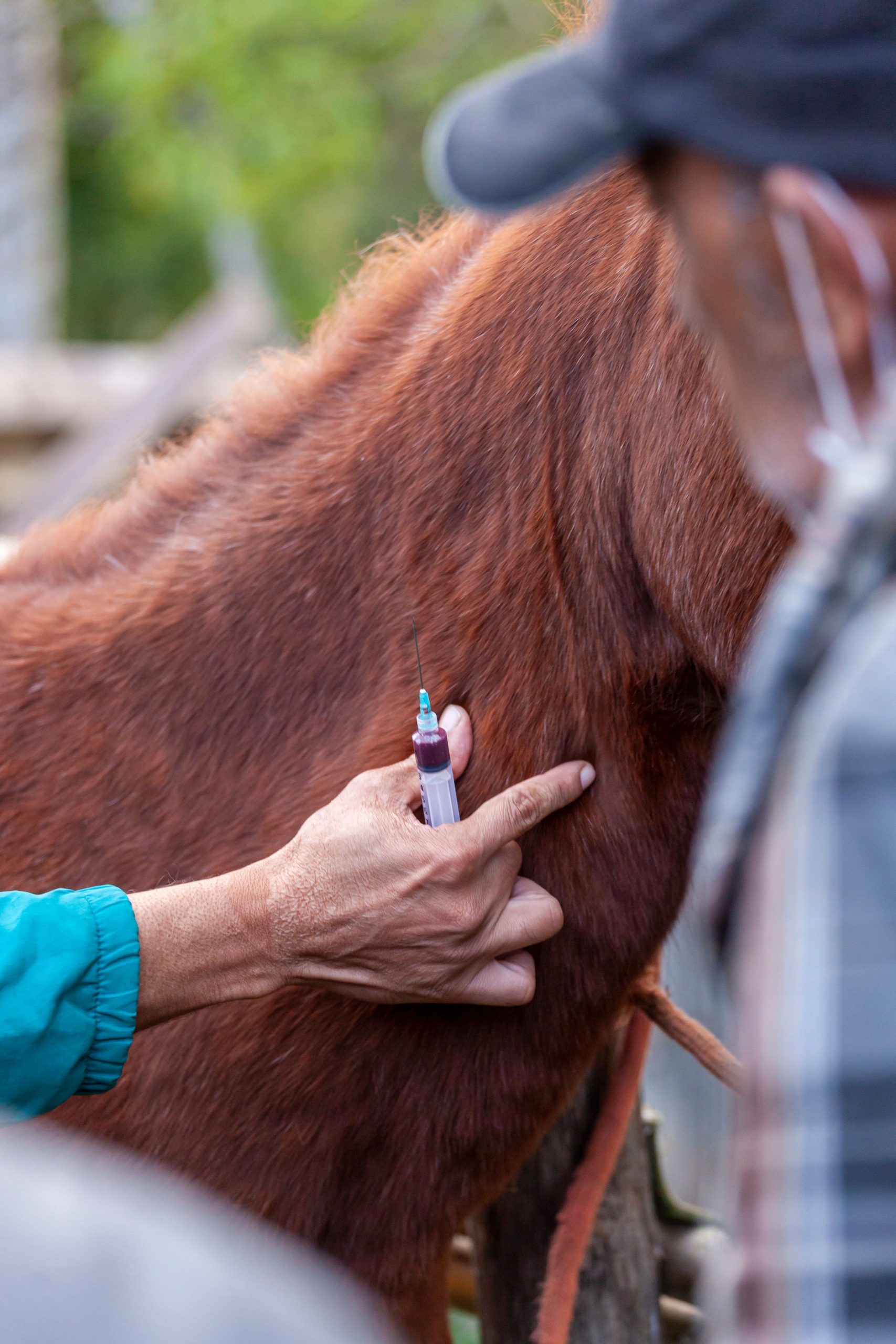

Core Vaccines Every Horse Needs
The American Association of Equine Practitioners recommends a set of core vaccines for every horse regardless of use or location, including tetanus, Eastern and Western equine encephalomyelitis, West Nile virus, and rabies. These diseases are either widespread, deadly, or both, making these vaccines non-negotiable for responsible horse ownership.
Risk-Based Vaccines
Depending on your horse’s lifestyle, additional vaccines may be recommended, including influenza and rhinopneumonitis for horses that travel or attend events, and Potomac horse fever or strangles for horses in higher-risk regions or barns. Your veterinarian can help determine which risk-based vaccines make sense for your situation.
Typical Vaccination Timing
Most core vaccines are given annually, often in spring before mosquito season begins for encephalitis and West Nile protection. Foals require a more involved initial series starting around four to six months of age, since maternal antibodies from colostrum can interfere with vaccine response if given too early.
Deworming: Moving Beyond the Old Rotation Method
Modern parasite control has shifted away from blindly rotating dewormers every two months toward a targeted approach based on fecal egg counts. This method identifies which horses are actually high shedders of parasite eggs, allowing you to treat strategically rather than over-deworming the whole herd.
Working with Your Veterinarian
A fecal egg count test, done once or twice a year, tells you which horses need treatment and helps track whether your deworming program is actually working. This targeted approach also helps slow the development of dewormer-resistant parasites, a growing problem in the horse world.
Keeping Records
Track vaccination dates, dewormer products used, and fecal egg count results for each horse so you can build an effective, individualized program over time rather than guessing year to year.
Browse our horses for sale and shop feed and nutrition supplies to support your herd’s overall health. For detailed vaccination guidelines, see the American Association of Equine Practitioners.