
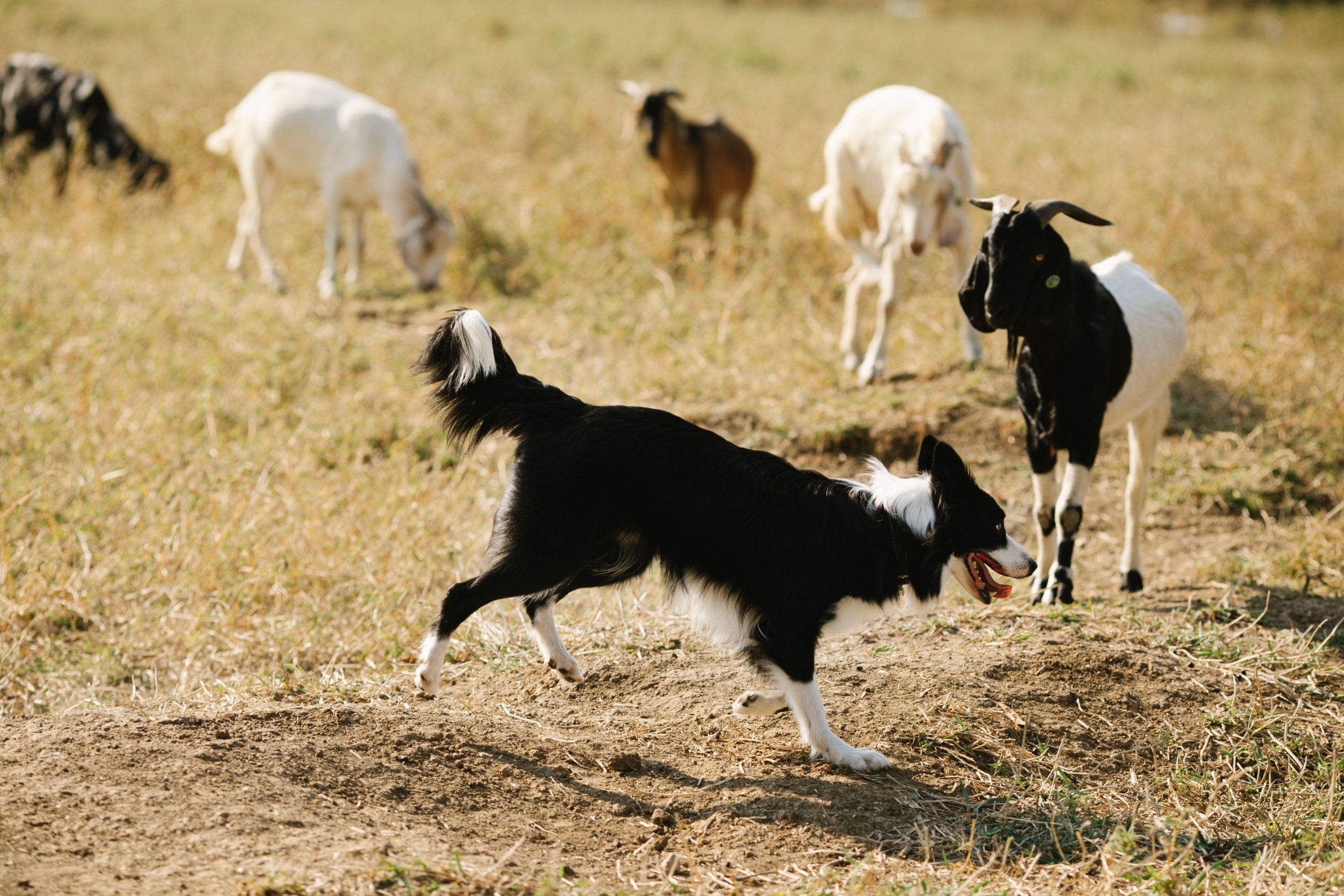

Bringing a livestock guardian dog into an existing herd or flock is a gradual process, not a one-day event. Rushing the introduction is one of the most common reasons new LGD owners run into problems. Here’s how to do it safely and set your dog up for success.
Start With Separation, Not Full Contact
Whether you’re introducing a puppy or an adult dog, the first step is controlled, fenced separation. A shared fence line lets the dog and livestock see, smell, and hear each other without any risk of rough play or chasing. This period can last anywhere from a few days to a few weeks depending on the dog’s age and temperament.
Move to Supervised Contact
Once both sides seem calm around the shared fence, you can begin short, closely supervised sessions of direct contact in a controlled space, such as a small paddock or pen. Watch closely for chasing, excessive barking, or defensive behavior from the livestock. End sessions on a calm note rather than waiting until stress builds.
Goats and sheep that have never been around a dog may initially panic. Give them time to learn the dog is not a threat, and never force interaction if animals appear highly stressed.
Introducing an Adult, Already-Trained LGD
An adult dog with prior guardian experience often adjusts faster than a puppy, but it still needs a period of adjustment to a new property, new smells, and a new group of animals. Keep the same gradual process, just compressed into a shorter timeline since the dog already understands its job. Expect a settling-in period of two to four weeks before the dog fully integrates into its new role.
Introducing Poultry Separately
Poultry requires extra caution, especially with young or adolescent dogs, since fast movement and small size can trigger chase instincts even in guardian breeds. Many experienced owners wait until a dog is fully mature, generally 18 months to 2 years old, before giving it unsupervised access to free-range poultry. Until then, keep birds in a secure coop or run separate from the dog’s unsupervised space.
Signs the Introduction Is Going Well
- The dog lies down calmly near the herd rather than staring, stalking, or fixating.
- Livestock stop reacting with alarm when the dog moves nearby.
- The dog shows more interest in the property perimeter than in the animals themselves.
- Any chasing or rough play decreases over repeated sessions rather than continuing unchanged.
When to Slow Down
If you see repeated chasing, grabbing, or the livestock remaining highly stressed after multiple sessions, go back a step. More separation and shorter supervised sessions are almost always the right correction. Consulting with the breeder you purchased the dog from, or an experienced LGD owner in your area, can help you troubleshoot specific issues. Extension services such as Penn State Extension publish detailed guidance on managing the introduction process for new guardian dogs; their livestock guardian dog resource is a helpful reference.
Patience Pays Off
A properly introduced livestock guardian dog will spend the rest of its working life bonded to your herd, so it’s worth taking the extra weeks to do the introduction right rather than rushing and having to undo bad habits later. Ready to add a guardian to your operation? Check out our current livestock guard dogs for sale, including dogs already started around goats, sheep, and poultry.


