
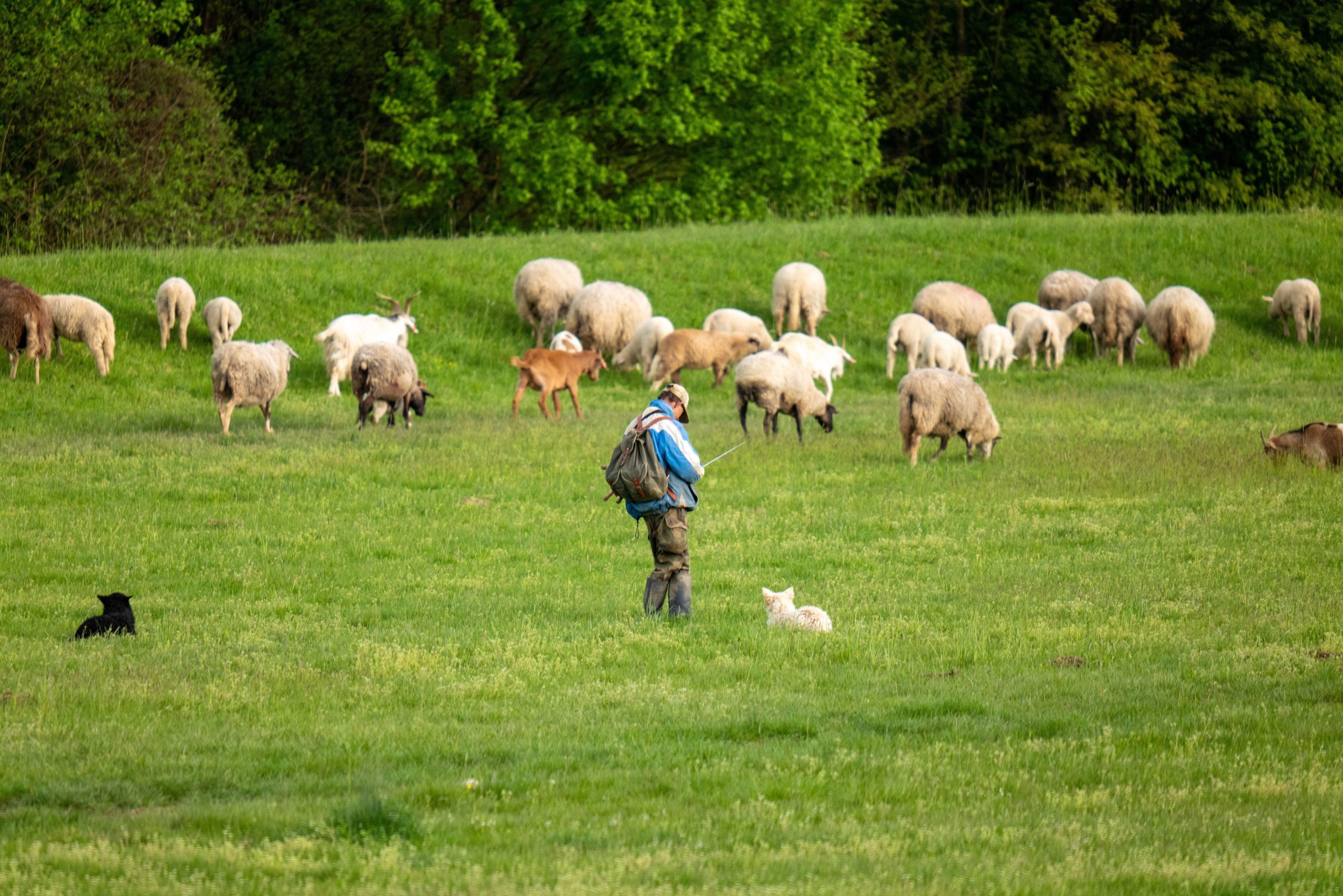

“I already have a farm dog, isn’t that the same thing?” It’s a question worth answering clearly, because livestock guardian dogs and herding dogs serve completely different, non-interchangeable roles on a farm.
Different Jobs by Design
A herding dog, such as a Border Collie, Australian Shepherd, or Kelpie, is bred to move livestock from one place to another using eye contact, crouching, controlled chasing, and sometimes nipping at heels. This is a job that requires high prey drive, quick reflexes, and an intense working focus, all traits deliberately bred into herding lines over generations.
A livestock guardian dog does the opposite. LGDs are bred to suppress prey drive and chase behavior, instead living calmly alongside livestock and defending them from outside threats. Where a herding dog is a highly active, task-driven partner working under a handler’s direction, a guardian dog works independently, around the clock, without needing commands to do its job.
Temperament Differences
| Trait | Herding Dog | Livestock Guardian Dog |
|---|---|---|
| Prey drive | High | Low |
| Independence | Works closely with handler | Works independently |
| Energy style | High-intensity bursts | Steady, low-key most of the day |
| Role with livestock | Moves and controls animals | Lives among and protects animals |
| Typical size | Small to medium | Large to giant |
Can One Dog Do Both Jobs?
In rare cases, a versatile working dog can be trained to do some herding-adjacent tasks, but this isn’t the norm and isn’t recommended as a primary strategy. Trying to use a herding breed as a guardian often fails because their high prey drive makes them prone to chasing or nipping livestock rather than calmly protecting them. Likewise, guardian breeds generally lack the drive and quick reflexes needed for serious herding work.
Most working farms that need both jobs done keep separate dogs for each role: a herding breed for moving animals during chores, and one or more guardian dogs living with the herd full time.
Which One Does Your Farm Actually Need?
If your main challenge is predator loss, coyotes, stray dogs, or other threats picking off animals, a livestock guardian dog is the right tool. If your main challenge is moving animals efficiently between pastures, pens, or through chutes, a herding dog is what you need. Many established operations eventually use both, since the two roles solve completely different problems.
Common Misconceptions
- “My herding dog will protect the herd too.” Herding breeds can alert to danger, but their instinct to chase makes them a poor substitute for a true guardian breed.
- “My LGD should also help move the sheep.” Guardian breeds are not bred for this and pushing them into a herding role can undermine their guarding instincts.
- “Any big dog can guard livestock.” Size alone doesn’t make a guardian. Generations of selective breeding for low prey drive and bonding instinct is what makes true LGD breeds effective.
Choosing the Right Working Dog
Understanding this distinction upfront saves new livestock owners a lot of frustration and wasted training time. If predator protection is your priority, browse our livestock guard dogs for sale, including puppies and already-trained adults bred specifically for guarding, not herding.


