
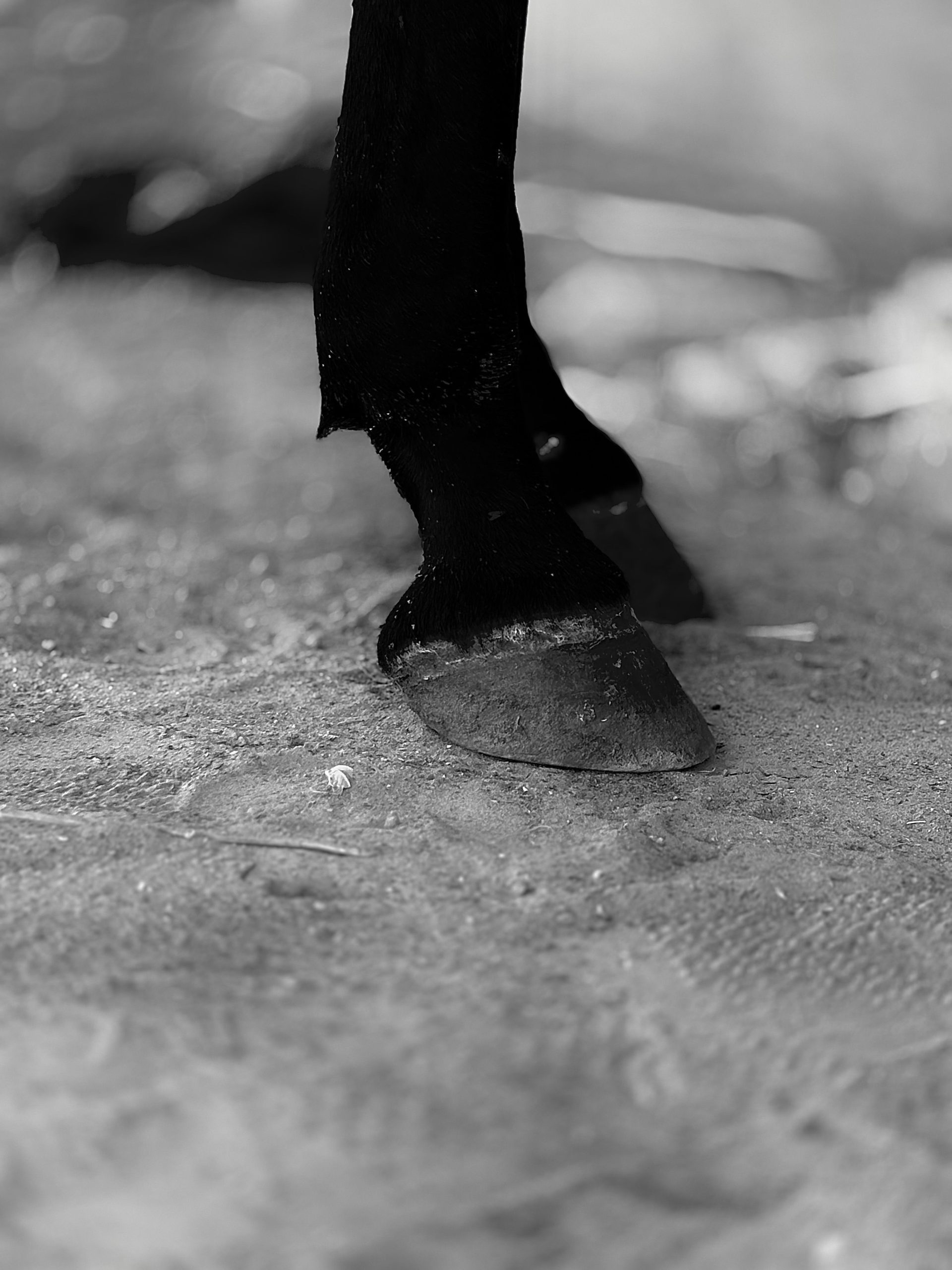

No Hoof, No Horse
This old horsemen’s saying still holds true today: hoof health underlies nearly everything else about a horse’s soundness and comfort. A regular hoof care routine prevents most of the common problems that cause lameness and lost riding time.
Daily Hoof Checks
Picking out each hoof before and after riding lets you spot packed debris, thrush, loose shoes, or early signs of injury before they become serious. This simple habit takes only a couple of minutes but catches most problems while they are still easy to treat.
Trimming Schedule
Most horses need a trim every six to eight weeks, whether they wear shoes or go barefoot, since hoof growth doesn’t stop just because a horse isn’t ridden. Skipping trims leads to overgrown, unbalanced hooves that stress joints and tendons up the leg.
To Shoe or Not to Shoe
Not every horse needs shoes. Many horses in light work with good hoof quality do fine barefoot, especially on soft footing, while horses in heavy work, those with thin soles, or animals ridden on rocky terrain often benefit from shoes or hoof boots for protection.
Common Hoof Problems
Thrush is a smelly bacterial infection of the frog usually caused by wet, dirty conditions, and it responds well to cleaning and topical treatment. White line disease and abscesses are other common issues that cause sudden lameness and usually require a farrier or veterinarian to properly diagnose and treat.
Supporting Healthy Hoof Growth
Good hoof quality starts from the inside, so a balanced diet with adequate biotin, zinc, and quality protein supports stronger hoof horn over time. Keeping stalls and paddocks clean and dry also goes a long way toward preventing moisture-related hoof problems.
Browse our horses for sale and stock up on hoof care and grooming supplies in our feed and nutrition category. For more on hoof anatomy and care, the Cooperative Extension System offers detailed equine hoof care guides.