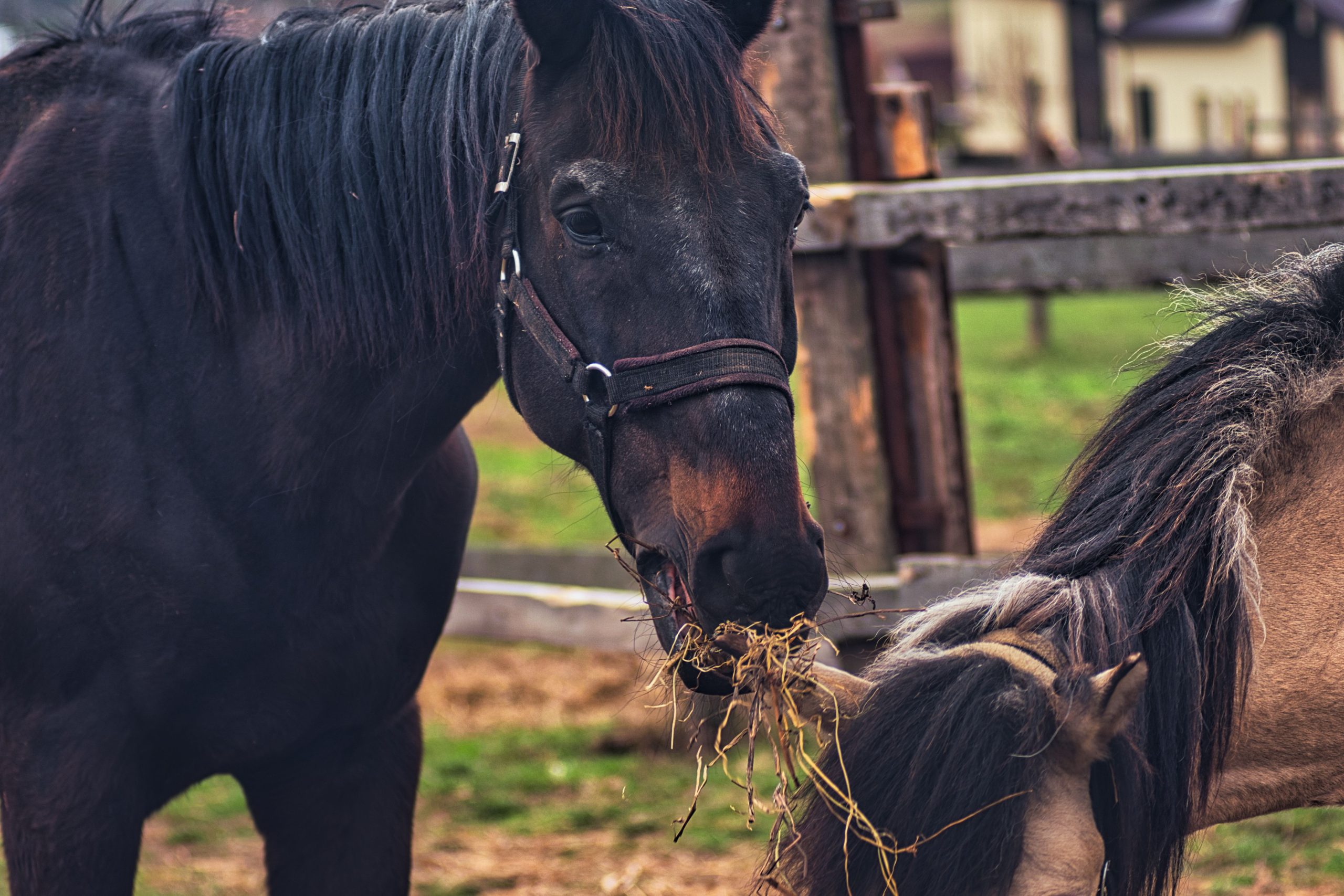

Feeding Horses Isn’t One-Size-Fits-All
A retired backyard pony and a hard-working performance horse have completely different nutritional needs, and feeding them the same ration is a common mistake that leads to obesity in one and poor condition in the other. Matching feed to age, workload, and body condition is the foundation of good horse care.
Forage First
Good quality hay or pasture should make up the bulk of any horse’s diet, ideally 1.5 to 2 percent of body weight per day. Horses are designed to graze continuously, and forage-based diets support healthy digestion far better than grain-heavy rations.
Feeding the Easy Keeper
Many mature horses in light or no work, including retired horses and easy-keeping breeds like ponies, do fine on quality forage alone with a vitamin and mineral supplement to fill nutritional gaps. Adding unnecessary grain to these horses is one of the leading causes of obesity and laminitis.
Feeding the Working Horse
Horses in regular work, especially those in heavy training or competition, often need concentrated feed in addition to forage to meet their energy demands. Look for a feed formulated for the correct activity level, and increase quantities gradually to avoid digestive upset.
Feeding Growing and Senior Horses
Young, growing horses need higher quality protein and balanced mineral ratios to support proper bone development, while senior horses often need easily digestible, softer feeds if dental issues make chewing hay difficult. Specialized senior feeds are formulated to be more digestible and often more calorie-dense per pound.
Reading Feed Tags
Compare guaranteed analysis numbers for protein, fat, and fiber between products, and choose a feed formulated for your horse’s specific life stage and workload rather than picking based on price or bag size alone. When in doubt, a check-in with an equine nutritionist or veterinarian can help fine-tune your program.
Shop our full range of feed and nutrition products for every life stage, and browse our horses for sale if you’re looking to add to your barn. For science-based feeding guidelines, the Cooperative Extension System offers detailed equine nutrition resources.