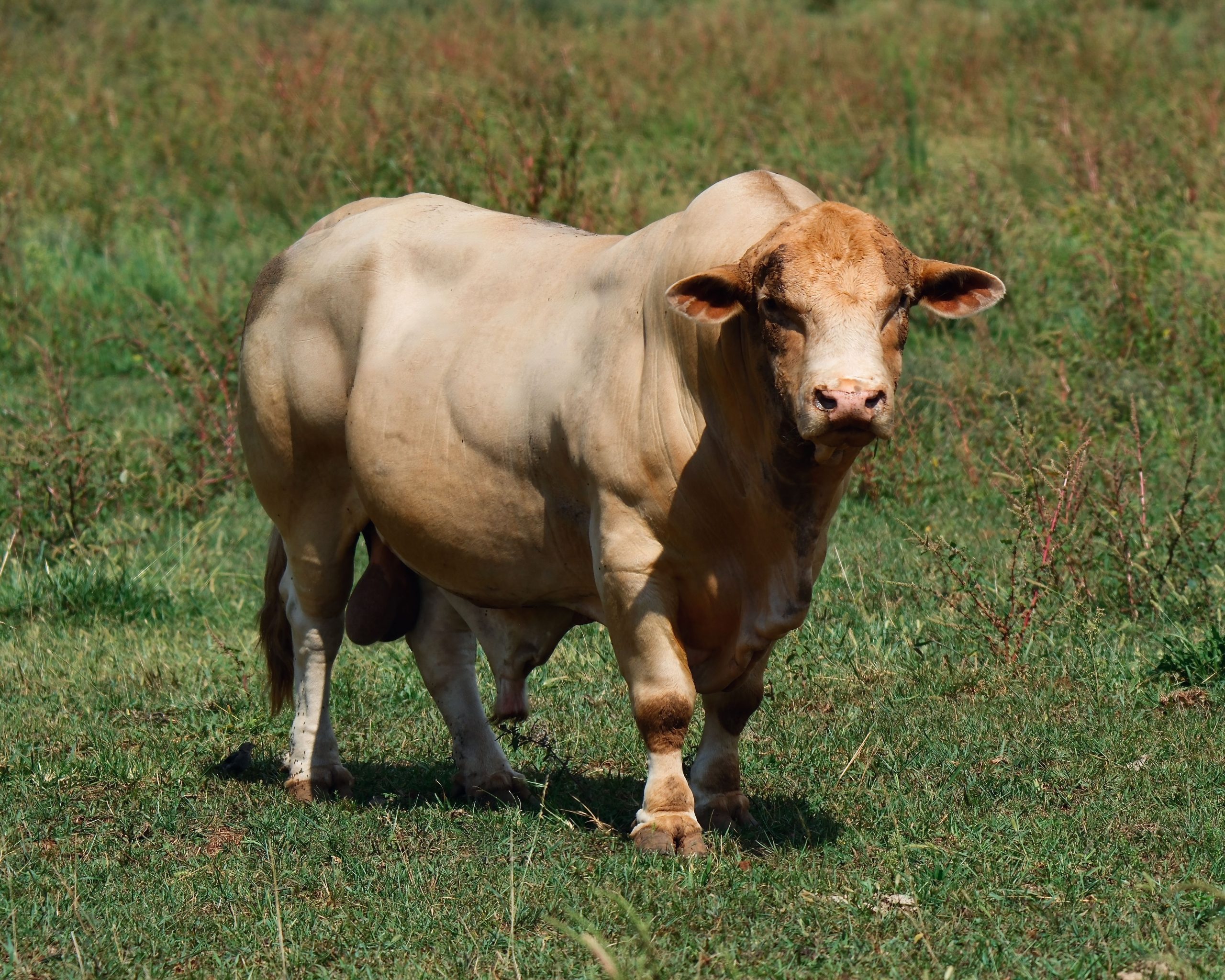

Why the Right Bull Matters
A bull contributes half the genetics to every calf in your herd for years to come, making him one of the most important purchases you’ll make as a cattle owner. A poor choice can mean calving problems, weak calves, or years of disappointing performance across your entire calf crop.
Start with a Breeding Soundness Exam
Never buy a bull without a current breeding soundness exam (BSE) from a veterinarian, which evaluates semen quality, physical structure, and reproductive organs. A bull can look perfectly healthy and still be subfertile or infertile, so skipping this step is one of the costliest mistakes a buyer can make.
Structural Soundness
Look closely at feet, legs, and overall frame, since a bull needs to travel long distances across pasture to breed cows effectively. Avoid animals with post-legged or sickle-hocked conformation, as these structural faults often lead to early lameness and reduced breeding life.
Birth Weight and Calving Ease EPDs
If you’re buying a registered bull, review his Expected Progeny Differences (EPDs), especially birth weight and calving ease, particularly if he’ll be bred to first-calf heifers. A bull with high birth weight EPDs bred to young heifers is a common cause of calving difficulty and stillbirths.
Temperament
Ask to see the bull handled and observe his reaction to people and pressure, since aggressive or flighty bulls are a genuine safety hazard around family and employees. Temperament is also moderately heritable, meaning a calm bull tends to produce calmer offspring.
Matching the Bull to Your Herd
Consider your cow herd’s frame size and your target market before choosing a bull breed and individual animal. A bull that produces calves too large for your heifers, or too small to meet your market’s expectations, undermines the value of the purchase regardless of his individual quality.
Browse our current cattle for sale for bulls and breeding stock, and see our feed and nutrition supplies to keep a new herd sire in top condition. For EPD explanations, the Cooperative Extension System publishes helpful guides for new buyers.