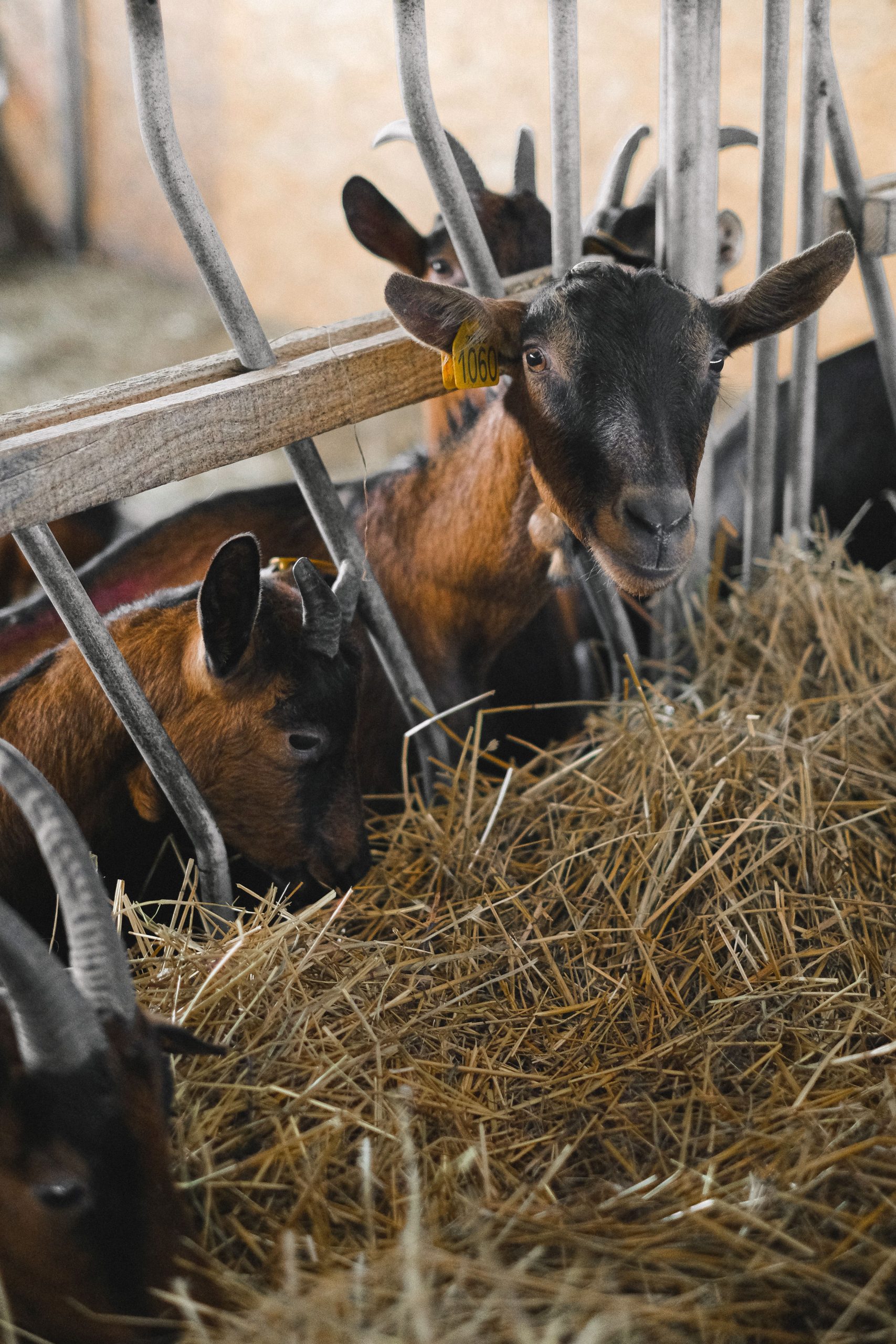

Goats have unique nutritional needs that shift significantly depending on their life stage. Feeding the same ration to a dry doe, a lactating doe, and a growing kid is one of the most common mistakes new goat owners make. Here’s how to feed goats correctly at every stage.
The Foundation: Forage First
Good quality hay or pasture should make up the majority of any goat’s diet. Goats are natural browsers, preferring a variety of leaves, brush, and rough forage over uniform pasture grass alone. A diet built on quality forage keeps the rumen healthy and reduces the risk of digestive upset from too much grain.
Maintenance Feeding for Dry Does and Bucks
Goats that aren’t lactating or in late pregnancy generally do well on good quality hay or pasture alone, with a mineral supplement formulated specifically for goats. Overfeeding grain to non-productive goats is a common cause of obesity and related health problems, including urinary calculi in bucks and wethers.
Feeding During Late Pregnancy
Nutritional needs increase significantly in the last six weeks of pregnancy, when most fetal growth occurs. Does need increased energy and protein during this window, often through a modest grain supplement alongside quality forage, to support fetal development without risking pregnancy toxemia from inadequate energy intake.
Feeding Lactating Does
Milk production places heavy nutritional demands on a doe, particularly in early lactation. Lactating does typically need free-choice quality hay, a well-formulated grain ration matched to milk output, and consistent access to fresh water, since water intake directly affects milk production.
Feeding Growing Kids
After weaning, growing kids need a higher protein diet to support proper development, typically 14 to 16 percent protein, along with continued access to good forage. Overfeeding grain to young goats, however, can cause rapid growth that increases the risk of urinary calculi, particularly in young bucks and wethers, so balance is important.
Minerals: Don’t Skip This Step
A goat-specific loose mineral, not a cattle or sheep mineral mix, should be available free choice at all times. Goats have specific copper requirements that differ significantly from sheep, and using the wrong species’ mineral mix can lead to serious deficiencies or toxicities over time.
Common Nutrition Mistakes
- Feeding a one-size-fits-all ration regardless of life stage or production status.
- Using sheep mineral, which lacks adequate copper for goats.
- Overfeeding grain to non-lactating, non-growing animals.
- Underestimating water needs, especially for lactating does.
Building a Feeding Program That Works
Matching your feeding program to each goat’s actual life stage and production status is the single biggest factor in maintaining a healthy, productive herd. Work with your local extension office or a livestock nutritionist to fine-tune rations for your specific forage quality and goals.
Ready to start feeding a healthy herd? Browse our current goats for sale and check out our feed and supply shop for goat-specific nutrition products.