
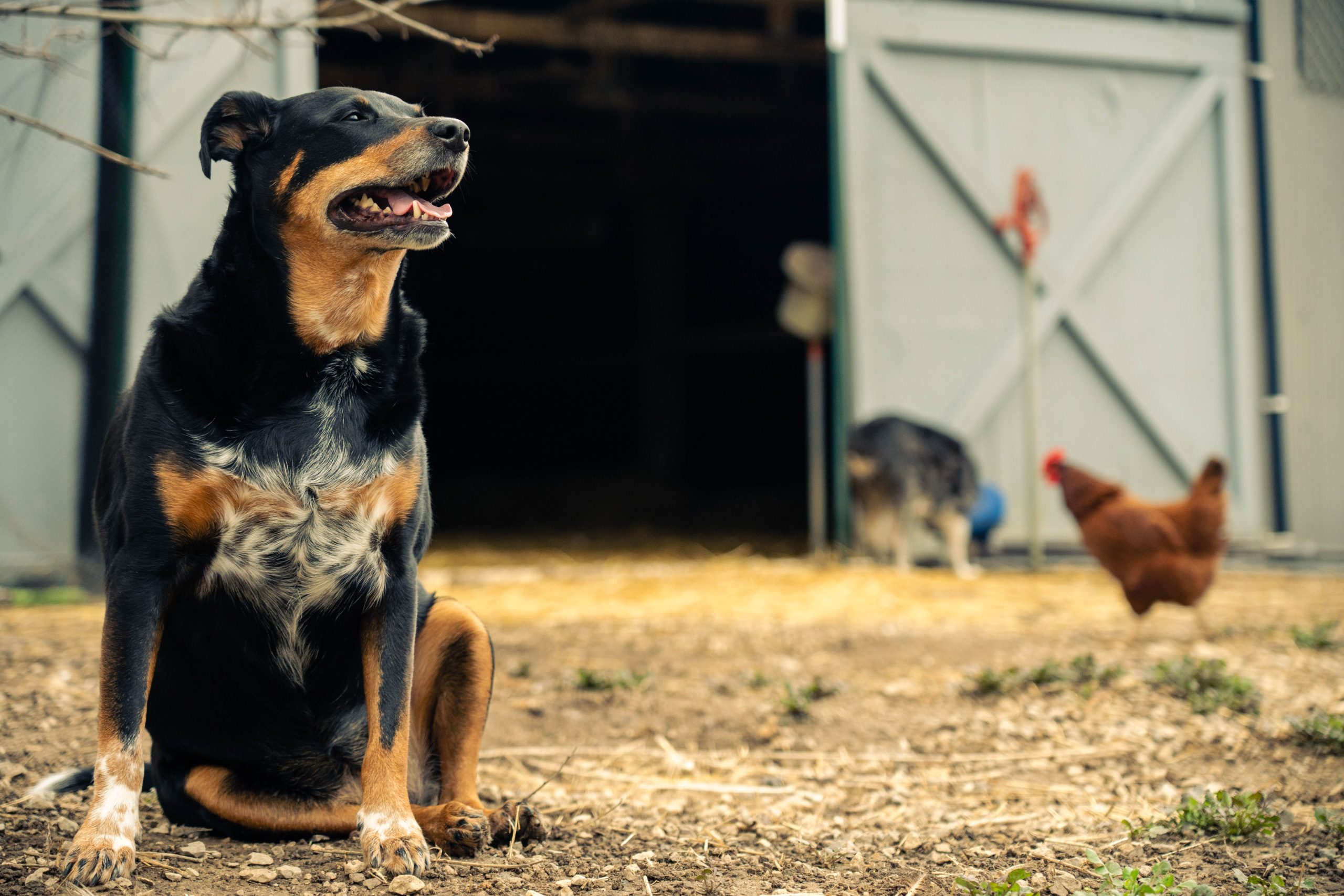

A livestock guardian dog that’s well socialized with goats, sheep, and poultry will spend years quietly protecting them without incident. One that’s poorly socialized can become a liability. Here’s how to get the socialization process right across different types of livestock.
Why Species-Specific Socialization Matters
An LGD that’s perfectly calm around goats may still need dedicated, careful introduction to poultry, since birds move differently, react more explosively, and can trigger chase responses even in dogs with excellent guarding instincts overall. Treat each species you keep as a separate socialization project, especially during a dog’s first year or two.
Socializing With Goats and Sheep
Goats and sheep are usually the easiest species to socialize an LGD with, since these breeds were originally developed specifically for this purpose. Start with fence-line introductions, move to short supervised sessions in a controlled pen, and gradually increase unsupervised time as the dog shows consistent calm behavior. Watch for head-butting from goats or sheep, which is a normal part of the herd establishing the dog’s place in the social order and usually resolves on its own.
Socializing With Poultry
Poultry deserves the most caution. Fast, erratic movement and small size can trigger prey drive even in dogs that are excellent with larger livestock. Best practice is to keep young or adolescent dogs separated from free-range birds by a secure fence or coop, allowing supervised, brief interactions only, until the dog reaches full maturity, generally 18 months to 2 years old. Many experienced owners don’t allow unsupervised access to poultry until a dog has a long track record of calm behavior around other livestock first.
Socializing With Cattle or Horses
While less common, some guardian dogs are also used around cattle or horses, particularly to guard calves or foals from predators. Size difference matters here: a guardian dog needs to learn to respect the space of much larger animals, and owners should supervise early interactions closely to prevent kicks or trampling, which can injure a young or careless dog.
General Socialization Best Practices
- Always start with fence-line or barrier introductions before direct contact.
- Keep initial sessions short and end on a calm note.
- Supervise closely until the dog has proven reliable, then extend unsupervised time gradually.
- Correct chasing or rough play immediately and consistently, regardless of species involved.
- Reintroduce caution any time you add a new species the dog hasn’t worked with before.
Signs Socialization Is Progressing Well
Look for the livestock relaxing around the dog rather than fleeing or showing alarm, the dog lying calmly nearby rather than fixating or stalking, and a steady decrease in any chasing or rough play over repeated sessions. These are all good indicators that the bond is forming correctly.
Building a Multi-Species Guardian
Many working farms keep goats, sheep, and poultry together, and a well-socialized LGD can learn to protect all of them at once with patient, species-specific introduction. Take the time to do this right, and you’ll have a guardian dog capable of protecting your entire operation, not just one type of animal.
Looking for a guardian dog to add to your mixed livestock operation? Browse our livestock guard dogs for sale, and check out our goats, sheep, and hens for sale.


